January 2026 - May 2026
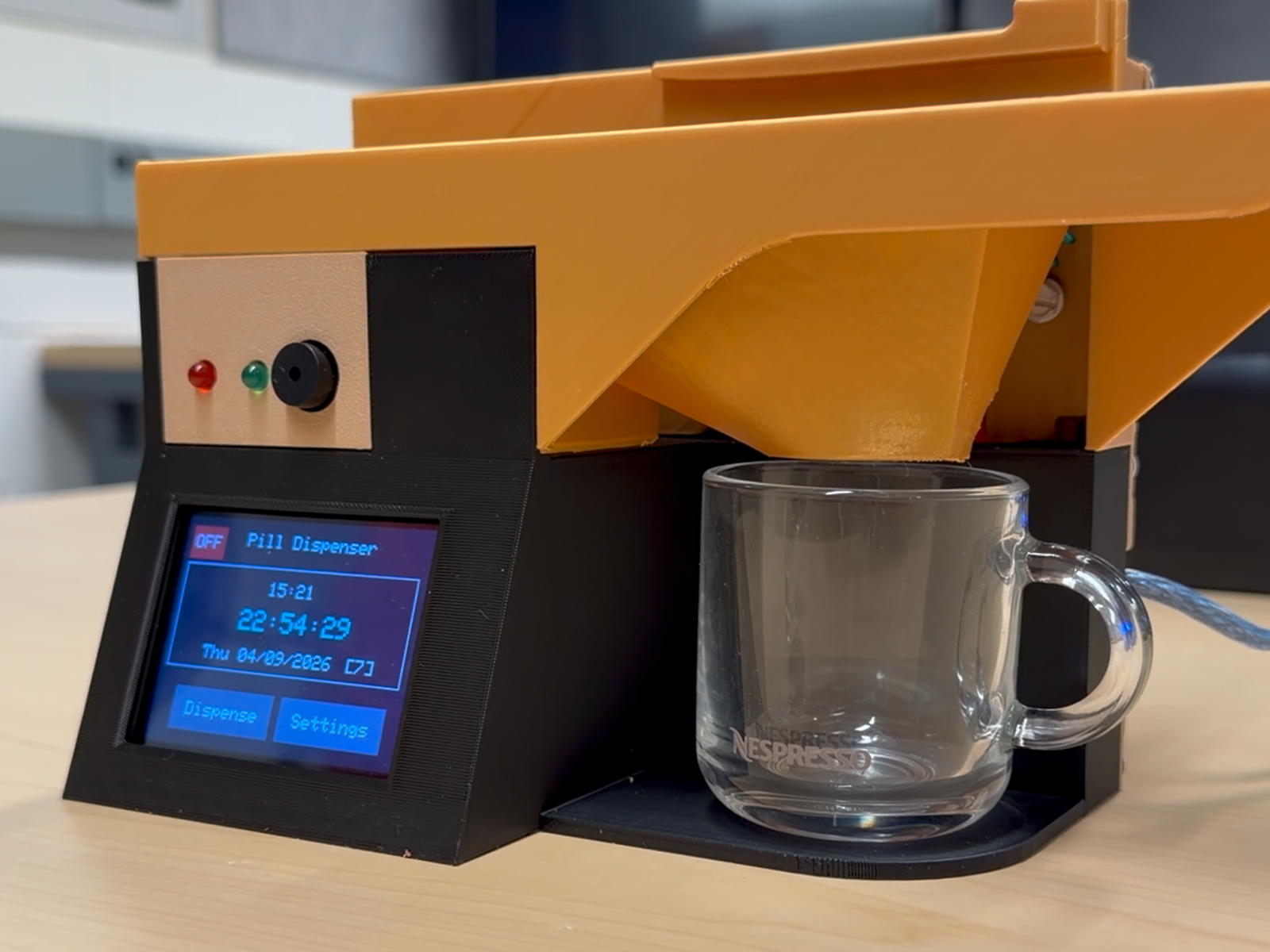
The objective involved developing a comprehensive, budget-friendly solution for automated pill delivery. This fully autonomous system was designed to dispense medication according to user-defined schedules, prioritizing intuitive operation alongside robust safety mechanisms.
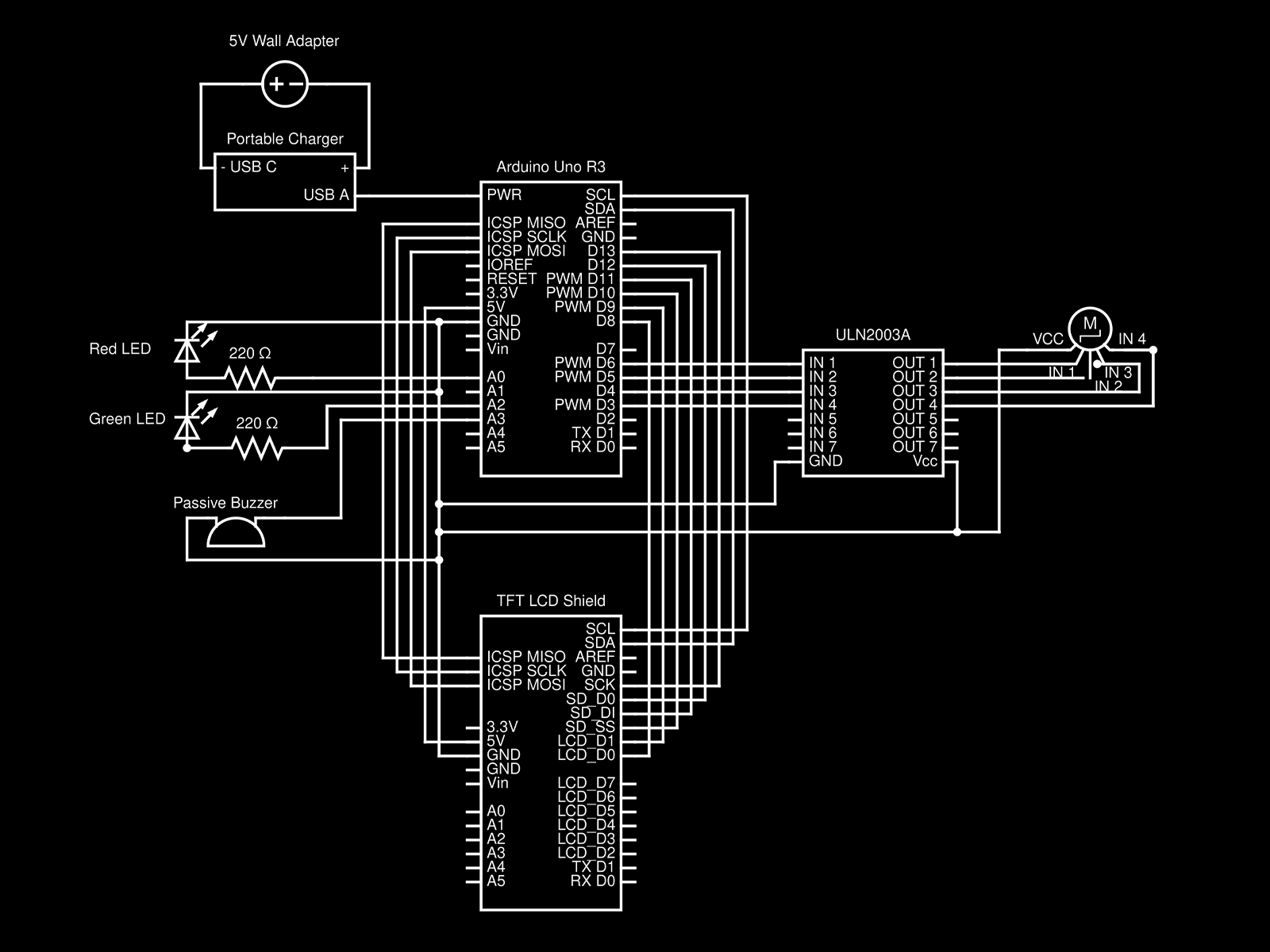
My core responsibilities involved developing the user interface and managing the integration of the TFT touchscreen. Furthermore, I implemented EEPROM functionality to ensure data persistence during power interruptions. Additionally, I aided in the component selection and wiring diagram.
To balance functionality and affordability, several specific components were integrated into the automated pill dispenser. An Arduino Uno R3 serves as the system’s main brain, managing communication with the various actuators and alerts. Users interact with the device via a resistive TFT (Thin-Film Transistor) touchscreen. For the mechanical dispensing process, the system utilizes a stepper motor paired with a ULN2003A driver. The device provides status notifications through a red LED, a green LED, and a passive buzzer. To ensure continuous operation, an external portable charger is included to provide redundant power should the primary source be disconnected.
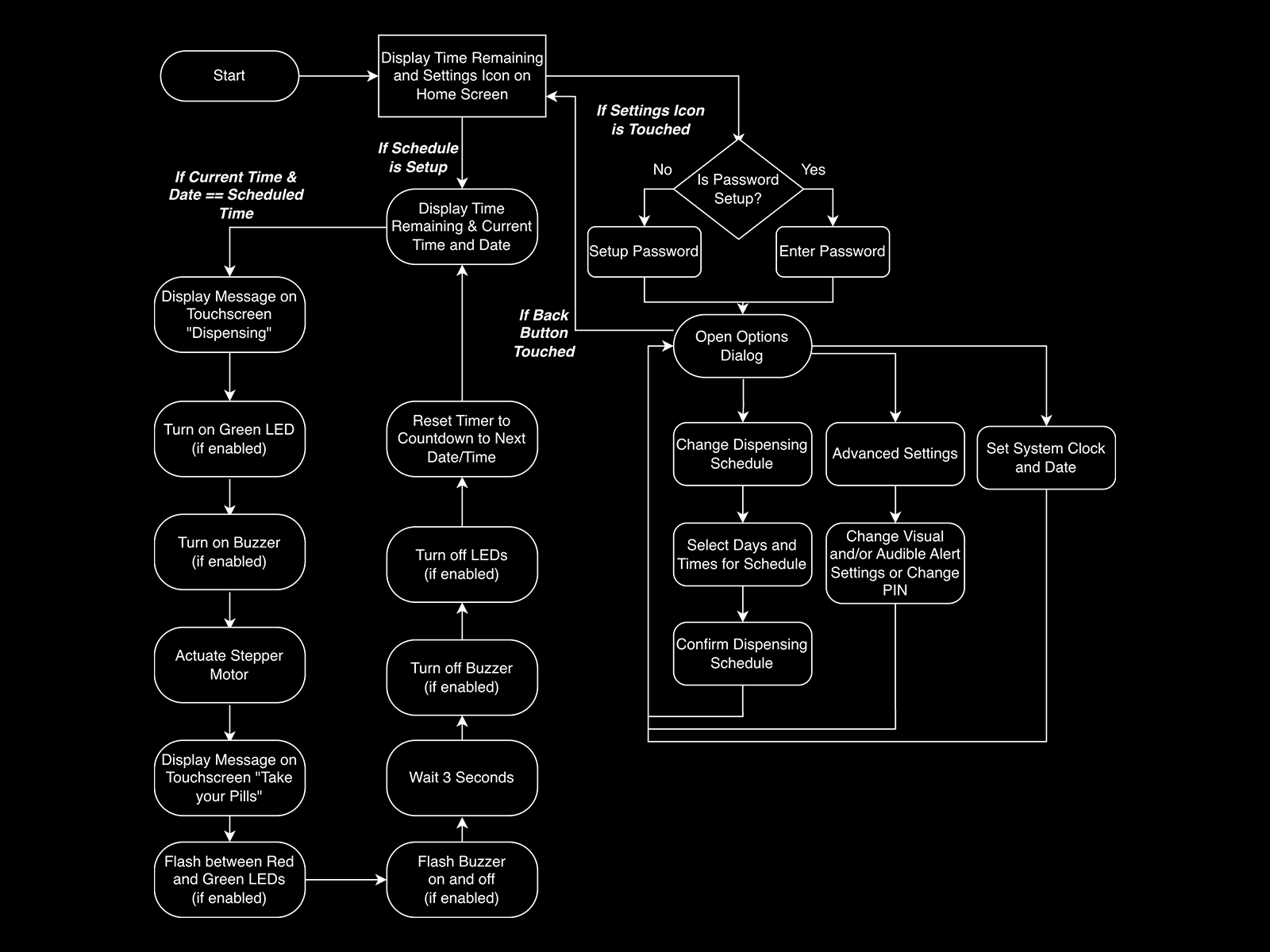
Developed using C++ on an Arduino microcontroller, the system features a TFT touchscreen that provides a real-time interface for the current date and time, along with a countdown to the upcoming dispensing cycle. Through the system settings, which are secured by a four-digit PIN for enhanced safety, users can configure the time, date, and dispensing schedule, as well as toggle audible and visual alerts. To ensure reliable performance, EEPROM (Electrically Erasable Programmable Read-Only Memory) is utilized to store user-defined configurations directly within the Arduino's memory bits, preserving critical scheduling data during unexpected power failures.